


![Top 5 Malaysian Universities in Global Rankings 2026 | Complete Guide]()
Introduction
Malaysia has established itself as a formidable force in global higher education, with its top universities consistently climbing international rankings and earning worldwide recognition. In 2026, Malaysian universities continue to make remarkable strides, with several institutions breaking into the global top 150 and achieving historic best-ever positions. For international students, particularly those from the Arab world, understanding which Malaysian universities hold the strongest global standing is essential for making informed decisions about their academic future. This comprehensive guide provides a detailed analysis of the top 5 Malaysian universities in the 2026 global rankings, their unique strengths, worldwide degree recognition, and the tangible career advantages graduates gain. Whether you are pursuing undergraduate, postgraduate, or doctoral studies, this guide equips you with the verified information needed to choose a university that offers both academic excellence and global career mobility.
Part 1: Understanding Global University Rankings for 2026
Before examining the top 5 Malaysian universities, it is essential to understand the ranking systems used to evaluate them.
QS World University Rankings 2026 evaluated 1,529 universities across 25 higher education systems using 11 indicators: Academic Reputation, Employer Reputation, Faculty-Student Ratio, Citations per Paper, Papers per Faculty, Staff with PhD, International Research Network, International Faculty, International Students, Inbound Exchange Students, and Outbound Exchange Students[reference:0]. In 2026, 32 Malaysian universities were evaluated, with 27 universities from Malaysia listed in the QS World University Rankings[reference:1][reference:2].
Times Higher Education (THE) World University Rankings 2026 ranked 2,191 universities worldwide across five key pillars: Teaching, Research Environment, Research Quality, Industry, and International Outlook[reference:3]. Malaysia now has 27 universities featured in the global list, making it the second most represented ASEAN country[reference:4].
For 2026, the ranking landscape shows:
- UM achieved its highest-ever position at 56th globally[reference:5]
- UM and UTP jointly topped Malaysian universities in THE rankings (201-250 band)[reference:6]
- 14 Malaysian universities broke into the QS World Top 50 by Subject[reference:7]
- 49 Malaysian universities listed in QS Asia Rankings, with 30 improving their positions[reference:8]
Key Insight: All five Malaysian research universities now rank among Asia's top 50, reflecting the country's strategic investment in higher education and research excellence[reference:9].
Part 2: The Top 5 Malaysian Universities in Global Rankings 2026
1. Universiti Malaya (UM) – Malaysia's Flagship University
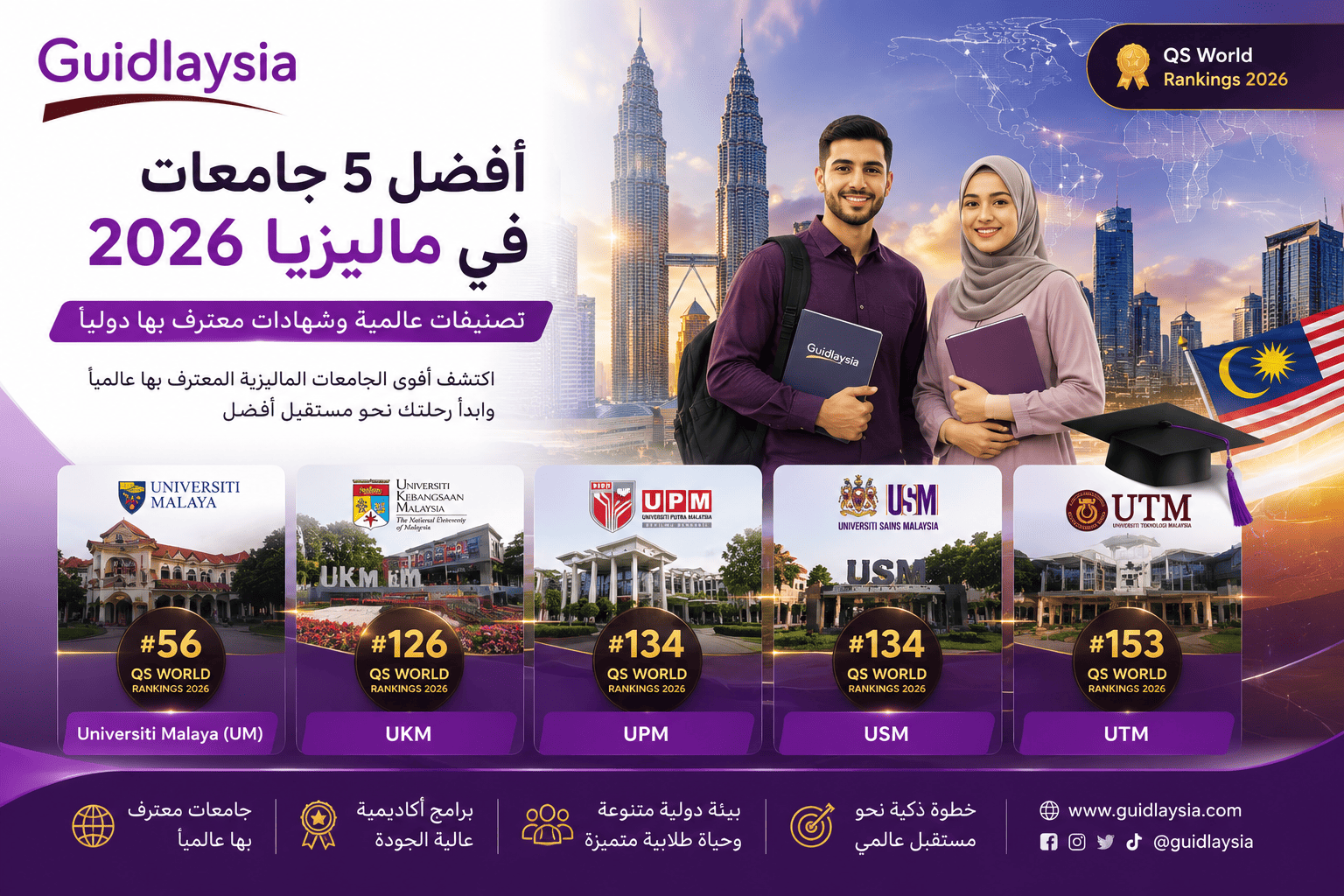
QS World University Ranking 2026: #56 (Highest-ever position, rising from #58)[reference:10]
THE World University Ranking 2026: 201-250 (Joint #1 in Malaysia)[reference:11]
QS Asia Ranking 2026: #15[reference:12]
Location: Kuala Lumpur
Universiti Malaya (UM), celebrating its 121st anniversary in 2026, is Malaysia's oldest and most prestigious university[reference:13][reference:14]. It remains the nation's highest-ranked institution and places among the top 3.7% of universities worldwide[reference:15]. UM's rise to #56 in the QS World University Rankings 2027 edition reflects its strategic focus on research excellence, international collaboration, and graduate employability[reference:16].
Global Performance Highlights:
- Academic Reputation: Ranked #56 globally, scoring 92.8[reference:17][reference:18]
- Employer Reputation: Ranked #61 globally, scoring 93.1[reference:19][reference:20]
- International Research Network: Ranked #125 globally[reference:21]
- International Students: Ranked #153 globally[reference:22]
- Employment Outcomes: Ranked #184 globally[reference:23]
- Sustainability: Ranked #166 globally[reference:24]
Subject Strengths (QS 2026): UM ranks #1 in Malaysia for Theology, Divinity and Religious Studies[reference:25]. The university also achieved recognition in Petroleum Engineering (global #34)[reference:26].
Global Recognition & Accreditations: UM holds self-accreditation status from the Malaysian Qualifications Agency (MQA), allowing it to accredit its own programs[reference:27]. Key professional accreditations include:
- Bachelor of Accounting recognized under Schedule 1 Accountants Act 1967[reference:28]
- Architecture programs accredited by the Royal Institute of British Architects (RIBA) Part II[reference:29]
- First institution globally accredited as a Dental Education Centre by the Royal College of Surgeons of England[reference:30]
- Biomedical Engineering recognized by the Engineering Accreditation Council (EAC)[reference:31]
- Master of Science in Analytical Chemistry accredited by the Royal Society of Chemistry (RSC)[reference:32]
Graduate Advantages & Career Outcomes: UM graduates benefit from the university's outstanding employer reputation (ranked #61 globally), ensuring strong recognition in the international job market[reference:33]. The university's strategic location in Kuala Lumpur provides extensive internship and employment opportunities with multinational corporations. UM alumni include prominent leaders, scholars, and professionals who have made significant impacts at national and global levels[reference:34]. Graduates are eligible for professional registration in their respective fields, including engineering (via Washington Accord signatory recognition), accounting (MIA recognition), and architecture (RIBA recognition).
2026 Highlights & Future Outlook: UM's rise to #56 represents its highest-ever position, reflecting the university's commitment to strategic vision and sustained excellence[reference:35]. UM vice-chancellor Noor Azuan Abu Osman stated: 'It affirms that when strategic vision is matched with clarity, cohesion, courage, and sustained action, UM will not merely participate in the global higher education landscape – we are there to define it'[reference:36]. UM's overall score of 81.2 across research, employability, sustainability, learning experience, and global engagement positions it for continued upward trajectory[reference:37].
2. Universiti Kebangsaan Malaysia (UKM) – The National University
QS World University Ranking 2026: #126 (Top 150 globally)[reference:38][reference:39]
THE World University Ranking 2026: 301-350[reference:40]
QS Asia Ranking 2026: #24[reference:41]
Location: Bangi, Selangor
Universiti Kebangsaan Malaysia (UKM) has firmly established itself among the world's top 150 universities, ranking #130 in the QS World University Rankings 2027[reference:42]. This places UKM in the top 10% globally among 1,504 listed institutions and the top 2% out of 8,808 institutions evaluated worldwide[reference:43]. UKM is also rated as a '5-Star University' by QS[reference:44].
Global Performance Highlights:
- Citations per Faculty: Improved by 81 spots in the latest rankings[reference:45][reference:46]
- International Research Network: Improved by 38 spots[reference:47]
- Sustainability: Improved by 35 spots[reference:48]
- International Students: Improved by 16 spots[reference:49]
Subject Strengths: UKM excels in multiple disciplines, with strong performance in Times Higher Education World University Rankings by Subject 2026 across 11 major fields[reference:50].
Global Recognition & Accreditations: UKM holds self-accreditation status from MQA[reference:51]. All programs are accredited by MQA and approved by the Ministry of Higher Education (MOHE)[reference:52]. Key professional recognition includes:
- Bachelor of Accounting (Honours) recognized as a professional program by the Malaysian Institute of Accountants (MIA)[reference:53]
Graduate Advantages & Career Outcomes: UKM graduates benefit from the university's strong national and international reputation. The university's focus on research and innovation ensures graduates are equipped with critical thinking and problem-solving skills valued by employers. UKM's location in Bangi, close to Kuala Lumpur, provides access to Malaysia's administrative and economic centers. UKM vice-chancellor Prof Datuk Dr Sufian Jusoh emphasized that the university's strength must be evaluated by 'educational quality, research impact, and contribution to society'[reference:54].
2026 Highlights & Future Outlook: UKM maintained its position within the top 150 globally despite intense international competition[reference:55]. The university continues to focus on elevating performance across teaching, research, innovation, and service[reference:56]. Vice-chancellor Sufian Jusoh stated: 'We will continue to focus on all these aspects in our efforts to elevate the overall performance of the university'[reference:57].
3. Universiti Putra Malaysia (UPM) – Research Excellence Leader
QS World University Ranking 2026: #134[reference:58][reference:59]
THE World University Ranking 2026: 501-600[reference:60]
QS Asia Ranking 2026: #22 (4th best in Southeast Asia)[reference:61][reference:62]
Location: Serdang, Selangor
Universiti Putra Malaysia (UPM) remains in the top 1% of 1,526 universities in Asia[reference:63]. UPM's global ranking of #134 proves that its academic quality and research excellence are internationally acknowledged[reference:64]. UPM recorded score improvements across all assessment indicators[reference:65].
Global Performance Highlights:
- Asia Ranking: #22 in QS Asia 2026[reference:66]
- Southeast Asia: 4th best university in the region[reference:67]
- Research Output: Consistently high performance in publications and citations
Subject Strengths: UPM is particularly renowned for Agriculture, Veterinary Science, Food Science, Chemical Engineering, and Environmental Studies. The university's Faculty of Economics and Management holds AACSB accreditation, making UPM the first Malaysian university to achieve this prestigious business school accreditation[reference:68].
Global Recognition & Accreditations: UPM is accredited by MQA and holds self-accreditation status[reference:69][reference:70][reference:71]. The Faculty of Engineering offers eight bachelor programmes fully recognized by the Engineering Accreditation Council (EAC)[reference:72]. Key accreditations include:
- AACSB accreditation for business programs (first in Malaysia)[reference:73]
- EAC accreditation for all engineering programs[reference:74]
Graduate Advantages & Career Outcomes: UPM graduates benefit from the university's strong research reputation and industry connections. The AACSB accreditation of business programs ensures graduates are highly competitive in the global business market. UPM's location in the Klang Valley provides access to numerous multinational corporations and research institutions.
2026 Highlights & Future Outlook: UPM continues its upward trajectory with sustained improvements across all ranking indicators[reference:75]. The university's focus on research excellence and international collaboration positions it for continued global recognition.
4. Universiti Sains Malaysia (USM) – The APEX University
QS World University Ranking 2026: #134 (tied with UPM)[reference:76][reference:77]
THE World University Ranking 2026: 401-500[reference:78]
QS Asia Ranking 2026: #34[reference:79]
Location: Penang
Universiti Sains Malaysia (USM) is Malaysia's only APEX (Accelerated Programme for Excellence) university, a designation awarded by the Malaysian government for achieving world-class status[reference:80]. USM is widely recognized as one of Malaysia's leading research universities and is generally regarded as being among the fourth or fifth best universities in the country[reference:81]. USM ranked #137 in 2024 and #146 in 2025, showing consistent improvement[reference:82][reference:83].
Global Performance Highlights:
- THE Impact Rankings: Ranked #14 globally for contributions to Sustainable Development Goals[reference:84]
- Arts & Humanities: Climbed 26 places to rank #181[reference:85]
- Engineering & Technology: Rose 20 places to #157[reference:86]
- QS Subject Rankings: Ranked #1 in Malaysia for Pharmacy & Pharmacology[reference:87]
- QS Subject Rankings 2026: Ranked #48 globally in specific subject areas[reference:88]
Subject Strengths: USM excels in Pharmacy & Pharmacology (ranked #1 in Malaysia, #48 globally)[reference:89]. The university also demonstrates strong performance in Chemical Engineering, Medicine, Applied Sciences, Biotechnology, and Environmental Studies.
Global Recognition & Accreditations: USM holds self-accreditation status from MQA[reference:90][reference:91]. The university successfully maintained its self-accreditation status until 2027[reference:92]. Key professional accreditations include:
- Mechanical Engineering program accredited with 6-year accreditation (2024-2029)[reference:93]
- Bachelor of Accounting recognized by Malaysian Institute of Accountants (MIA)[reference:94]
- Quantity Surveying program accredited by Board of Quantity Surveyors Malaysia (BQSM) and Royal Institution of Chartered Surveyors (RICS)[reference:95]
Graduate Advantages & Career Outcomes: USM graduates benefit from the university's strong research culture and international reputation. The university's location in Penang, a major industrial and tourist hub, provides excellent internship and employment opportunities. RICS accreditation for Quantity Surveying ensures international recognition and unlimited career opportunities[reference:96].
2026 Highlights & Future Outlook: USM continues to strengthen its international reputation, with significant improvements across all major subject areas[reference:97]. The university's strong performance in sustainability rankings (THE Impact Rankings #14 globally) reflects its commitment to addressing global challenges. USM's consistent upward trajectory in QS rankings (from #146 in 2025 to #134 in 2026[reference:98][reference:99]) demonstrates its growing global influence.
5. Universiti Teknologi Malaysia (UTM) – Engineering & Technology Leader
QS World University Ranking 2026: #153 (Up from #181 previously)[reference:100][reference:101][reference:102]
THE World University Ranking 2026: 401-500[reference:103]
QS Asia Ranking 2026: #25 (soaring to impressive regional position)[reference:104]
Location: Johor Bahru / Kuala Lumpur
Universiti Teknologi Malaysia (UTM) has demonstrated remarkable progress in global rankings, rising significantly in the QS World University Rankings 2026[reference:105][reference:106]. UTM soared to #25 in the QS Asia University Rankings 2026, underscoring its rising regional influence and research prowess[reference:107]. The university continues to strengthen its global academic reputation with notable achievements across all broad subject areas[reference:108].
Global Performance Highlights:
- QS Asia Ranking 2026: #25 (significant regional rise)[reference:109]
- Petroleum Engineering: Ranked #36 globally (up from #46 previously)[reference:110][reference:111]
- Architecture & Built Environment: Advanced into global top 50 from 51-100 band[reference:112]
- Ranked #1 in Malaysia: Architecture & Built Environment, Mineral & Mining Engineering, Civil & Structural Engineering, and Chemical Engineering[reference:113][reference:114]
Subject Strengths: UTM is Malaysia's premier technological university, excelling in:
- Architecture & Built Environment (#1 in Malaysia, Global Top 50)[reference:115]
- Civil & Structural Engineering (#1 in Malaysia)[reference:116]
- Chemical Engineering (#1 in Malaysia)[reference:117]
- Mineral & Mining Engineering (#1 in Malaysia)[reference:118]
- Petroleum Engineering (#36 globally, #3 in Malaysia)[reference:119][reference:120]
- Engineering & Technology (strong overall performance)[reference:121]
Global Recognition & Accreditations: UTM programs are fully accredited by MQA[reference:122]. The university holds recognition from the Board of Engineers Malaysia (BEM) and the Engineering Accreditation Council (EAC). Key professional recognitions include:
- Engineering programs accredited under the Washington Accord through EAC/BEM recognition
- IT and computing programs recognized under the Seoul Accord through MBOT accreditation[reference:123]
- All programs approved by the Ministry of Higher Education and MQA[reference:124]
Graduate Advantages & Career Outcomes: UTM graduates enjoy exceptional career prospects, particularly in engineering and technology fields. The Washington Accord recognition ensures UTM engineering graduates are eligible for professional registration in all signatory countries (including the US, UK, Australia, Canada, and many others). The Seoul Accord recognition for computing programs provides similar international mobility for IT graduates. UTM's strategic location near Singapore (Johor Bahru campus) offers access to one of Asia's most dynamic job markets.
2026 Highlights & Future Outlook: UTM's rise to #25 in QS Asia Rankings and #153 globally represents significant momentum[reference:125][reference:126]. With four subject areas ranked #1 in Malaysia and two subjects in the global top 50, UTM has established itself as the undisputed leader in technical and engineering education in Malaysia. The university's continued focus on research excellence and international collaboration[reference:127] positions it for further global recognition.
Part 3: Degree Recognition & Global Accreditation
One of the most critical questions for international students is whether their Malaysian degree will be recognized globally. The answer is a resounding yes for graduates of Malaysia's top 5 universities.
Malaysian Qualifications Agency (MQA) Accreditation: All programs offered by Malaysia's top universities are accredited by the Malaysian Qualifications Agency (MQA), the national quality assurance body[reference:128]. MQA accreditation ensures that programs meet national standards set by the Malaysian higher education framework[reference:129]. All top 5 universities hold self-accreditation status, meaning they have the authority to accredit their own programs[reference:130][reference:131].
Professional Body Recognition: Malaysian university degrees are recognized by numerous international professional bodies:
- Engineering: Programs accredited by the Engineering Accreditation Council (EAC) are recognized under the Washington Accord, ensuring international recognition in all signatory countries[reference:132]
- Accounting: Accounting programs are recognized by the Malaysian Institute of Accountants (MIA) and other international accounting bodies[reference:133][reference:134]
- Architecture: Programs recognized by the Royal Institute of British Architects (RIBA)[reference:135]
- Quantity Surveying: Recognized by the Royal Institution of Chartered Surveyors (RICS)[reference:136]
- IT & Computing: Recognized under the Seoul Accord[reference:137]
- Dentistry: UM is the first institution globally accredited as a Dental Education Centre by the Royal College of Surgeons of England[reference:138]
International Equivalency: Malaysian degrees are recognized by equivalency authorities worldwide, including IQAS in Canada[reference:139] and various international credential evaluation services. Graduates can pursue postgraduate studies at universities worldwide and practice professionally in most countries upon meeting local licensing requirements.
Part 4: Graduate Outcomes & Career Advantages
Graduates of Malaysia's top 5 universities enjoy significant career advantages:
Employer Recognition: UM's employer reputation ranks #61 globally, reflecting strong recognition among international employers[reference:140]. This reputation extends across all top Malaysian universities, with employers valuing the strong research foundation, practical skills, and international exposure graduates possess.
International Mobility: Washington Accord recognition for engineering graduates ensures professional registration eligibility in all signatory countries (US, UK, Australia, Canada, New Zealand, etc.)[reference:141]. Similarly, Seoul Accord recognition provides international mobility for computing graduates[reference:142]. RICS accreditation for Quantity Surveying ensures international recognition and unlimited opportunities[reference:143].
Higher Education Pathways: Malaysian degrees are recognized for postgraduate studies worldwide. Graduates regularly gain admission to top universities in the UK, US, Australia, Canada, and Europe for master's and doctoral programs.
Employment Outcomes: UM ranked #184 globally for employment outcomes[reference:144]. All top 5 universities have strong career services, internship programs, and industry partnerships that facilitate graduate employment.
Alumni Networks: Graduates join extensive alumni networks spanning the globe, providing valuable professional connections and career opportunities. UM has produced many national and global leaders and scholars[reference:145].
Part 5: 2026 Ranking Predictions & Future Trends
Based on current performance and strategic initiatives, here are the projected trends for Malaysian universities:
University of Malaya (UM): With its highest-ever position of #56 in 2026[reference:146][reference:147] and a strong upward trajectory, UM is projected to enter the global top 50 within the next 2-3 years. The university's overall score of 81.2[reference:148] and strong performance in academic and employer reputation indicators position it for continued growth.
Universiti Kebangsaan Malaysia (UKM): UKM's improvement in key indicators including citations per faculty (#81 spots)[reference:149] and international research network (#38 spots)[reference:150] suggests continued upward movement. The university remains within the top 150 globally[reference:151].
Universiti Putra Malaysia (UPM): With score improvements across all indicators[reference:152] and AACSB accreditation for business programs, UPM is projected to continue its rise in global rankings, potentially entering the top 120 in the coming years.
Universiti Sains Malaysia (USM): Consistent improvement from #146 (2025) to #134 (2026)[reference:153][reference:154] and #1 ranking in Pharmacy & Pharmacology[reference:155] suggest USM will continue its upward trajectory, particularly in specialized subject areas.
Universiti Teknologi Malaysia (UTM): With significant jumps in QS Asia (#25)[reference:156] and global (#153)[reference:157] rankings, and four subjects ranked #1 in Malaysia[reference:158][reference:159], UTM is projected to enter the global top 150 and continue strengthening its regional influence.
Overall Malaysian Higher Education Outlook: Malaysia is cited as a model of internationalisation and system coordination[reference:160]. The country nearly achieved its target of 250,000 international students by 2025[reference:161]. Malaysia's universities combine affordability, cultural openness, and global credibility, making Malaysia one of the fastest-growing education destinations in the region[reference:162]. The high STEM graduate share is recognized as a key factor supporting Malaysia's manufacturing and economic development[reference:163].
Frequently Asked Questions
Are degrees from Malaysian universities recognized internationally?
Yes. Degrees from Malaysia's top 5 universities (UM, UPM, UKM, USM, UTM) are internationally recognized. All programs are accredited by MQA, and professional programs hold additional accreditations from international bodies including the Washington Accord (engineering), RIBA (architecture), RICS (quantity surveying), MIA (accounting), and AACSB (business)[reference:164][reference:165][reference:166][reference:167].
Can I work abroad after graduating from a Malaysian university?
Yes. Graduates of Malaysian universities are eligible to work in most countries. Engineering graduates can register as professional engineers in all Washington Accord signatory countries[reference:168]. Accounting graduates are recognized by MIA[reference:169] and other international accounting bodies. The strong employer reputation of Malaysian universities, particularly UM (ranked #61 globally for employer reputation[reference:170]), ensures graduate employability worldwide.
Which Malaysian university is best for engineering?
Universiti Teknologi Malaysia (UTM) is Malaysia's premier engineering university, ranked #1 in Malaysia for Architecture, Civil Engineering, Chemical Engineering, and Mineral Engineering[reference:171][reference:172], with Petroleum Engineering ranked #36 globally[reference:173].
Which Malaysian university has the best global ranking?
Universiti Malaya (UM) ranks highest globally at #56 in the QS World University Rankings 2026[reference:174]. UM is followed by UKM (#126)[reference:175], UPM and USM (tied at #134)[reference:176][reference:177], and UTM (#153)[reference:178].
Are Malaysian university degrees accepted for postgraduate studies abroad?
Yes. Malaysian degrees are recognized by universities worldwide for postgraduate admission. Graduates of top Malaysian universities regularly gain admission to prestigious institutions in the UK, US, Australia, Canada, and Europe. The Malaysian Qualifications Agency (MQA) accreditation ensures international equivalency[reference:179].
Is University of Malaya (UM) accredited?
Yes. UM is fully accredited by MQA, holds self-accreditation status, and its programs hold professional accreditations including RIBA Part II (Architecture), RSC (Chemistry), EAC (Engineering), and the Royal College of Surgeons of England (Dentistry)[reference:180][reference:181][reference:182][reference:183].
How does the Washington Accord benefit engineering graduates?
The Washington Accord is an international agreement that recognizes the substantial equivalence of engineering programs accredited by signatory bodies[reference:184]. Malaysian engineering graduates can register as professional engineers in all member countries (including the US, UK, Australia, Canada, New Zealand, Japan, and many others) without additional examination[reference:185].
Conclusion
Malaysia's top 5 universities have firmly established themselves on the global stage, with all five research universities now ranking among Asia's top 50[reference:186]. In 2026, Universiti Malaya achieved its highest-ever position at #56 globally[reference:187], while UTM soared to #25 in Asia[reference:188] and UKM maintained its position in the global top 150[reference:189].
The combination of strong global rankings, international professional accreditations (Washington Accord, RIBA, RICS, AACSB, MIA), and excellent employer reputation makes these universities outstanding choices for international students, particularly those from the Arab world seeking globally recognized qualifications.
Graduates of these institutions enjoy:
- Globally recognized degrees accepted for employment and postgraduate studies worldwide
- Professional registration eligibility in signatory countries through international accords
- Strong employer recognition (UM ranked #61 globally for employer reputation)[reference:190]
- Access to extensive international alumni networks
- Competitive advantage in the global job market
As Malaysia continues to invest in higher education, research infrastructure, and international collaboration[reference:191], its universities are projected to climb even higher in global rankings. For Saudi and Arab students, Malaysia offers the perfect combination of world-class education, affordable costs, and a welcoming Islamic environment.
Ready to begin your journey at one of Malaysia's top-ranked universities? Guidlaysia provides free, personalized guidance for international students applying to Malaysian universities. From helping you choose the right program and university to navigating the application and visa processes, our team is here to support you every step of the way. Contact us today to start your 2026 application and achieve your academic dreams at a globally recognized Malaysian university.