

![Malaysian Universities for saudian]()
Introduction
Malaysia has become one of the most prominent educational destinations for Saudi students in recent years, combining globally recognized education quality, affordable costs, and a safe and familiar Islamic environment. As we enter 2026, Malaysia continues to attract thousands of Saudi students annually, whether through the Custodian of the Two Holy Mosques Scholarship Program or through private study. In this comprehensive guide, we provide everything you need to know about studying in Malaysia for Saudi students in 2026: from recognized universities and admission requirements, to required documents, visa details, tuition fees and living costs, available scholarships, and practical tips from the experiences of previous Saudi students. Whether you are planning to pursue a Bachelor's, Master's, or PhD, this guide is your complete reference to achieving your study dream in Malaysia.
Why Choose Malaysia for Your Studies?
Malaysia offers numerous advantages that make it a preferred destination for Saudi and Arab students in general. Here are the most prominent benefits:
- Official Recognition from the Saudi Ministry of Education: The Saudi Ministry of Higher Education recognizes studies in Malaysia, provided that the university is included in the list of Malaysian universities on the Safir platform. This list is updated annually to ensure academic degree accreditation upon return to the Kingdom.
- World-Class Education Quality: Malaysian universities rank highly in global rankings, with the University of Malaya (UM) leading Malaysian universities in the 2026 QS World University Rankings at #56 globally, reflecting the high quality of education.
- Affordable Costs: Malaysia is characterized by lower study and living costs compared to many Western countries and even some Arab countries, making it an economically attractive option for Saudi students.
- Safe Islamic Environment: Malaysia is a Muslim-majority country, providing Saudi students with a familiar and comfortable environment with halal food widely available, mosques everywhere, and safe and stable conditions.
- English as the Language of Instruction: Malaysian universities use English as the medium of instruction, and also provide intensive language courses for undergraduate students who are not proficient in English before starting their studies.
- Relatively Shorter Study Duration: A Bachelor's degree in Malaysia typically takes 3 years with an intensive curriculum focused on the specific major and excluding general subjects.
- Cultural Diversity: The student community in Malaysia includes students from over 150 countries, providing a unique opportunity to learn about different cultures and build an international network.
- Easy Visa Procedures: Malaysia has a centralized and transparent system for issuing student visas through EMGS, with a high approval rate of approximately 90% of applications.
Malaysian Universities Recognized in Saudi Arabia
Official recognition from the Saudi Ministry of Education is the fundamental requirement to ensure degree equivalency upon return to the Kingdom. Therefore, students must verify that their university is listed in the Safir list issued by the Saudi Ministry of Education. Based on global rankings and official recognition criteria, here is a list of the most prominent Malaysian universities recognized in Saudi Arabia for 2026:
Public Universities (The Big Five Research Universities)
- University of Malaya (UM): The oldest and most prestigious university in Malaysia, with high-quality education across various disciplines. Ranked #1 locally and #56 globally according to QS 2026. Strong in Medicine, Engineering, Computer Science, Pharmacy, Law, and Business Administration.
- Universiti Putra Malaysia (UPM): Known for its advanced research and programs in Agricultural Sciences, Veterinary Medicine, Engineering, and Business Administration (AACSB accredited).
- Universiti Sains Malaysia (USM): The only university awarded the APEX status for excellence. Strong in Pharmacy, Chemical Engineering, Medicine, and Applied Sciences.
- Universiti Kebangsaan Malaysia (UKM): The National University of Malaysia, strong in Humanities, Health Sciences, Economics, and Engineering.
- Universiti Teknologi Malaysia (UTM): The best in Engineering and Technology, offering distinguished programs in Civil, Electrical, Mechanical, and Petroleum Engineering.
Recognized Private Universities
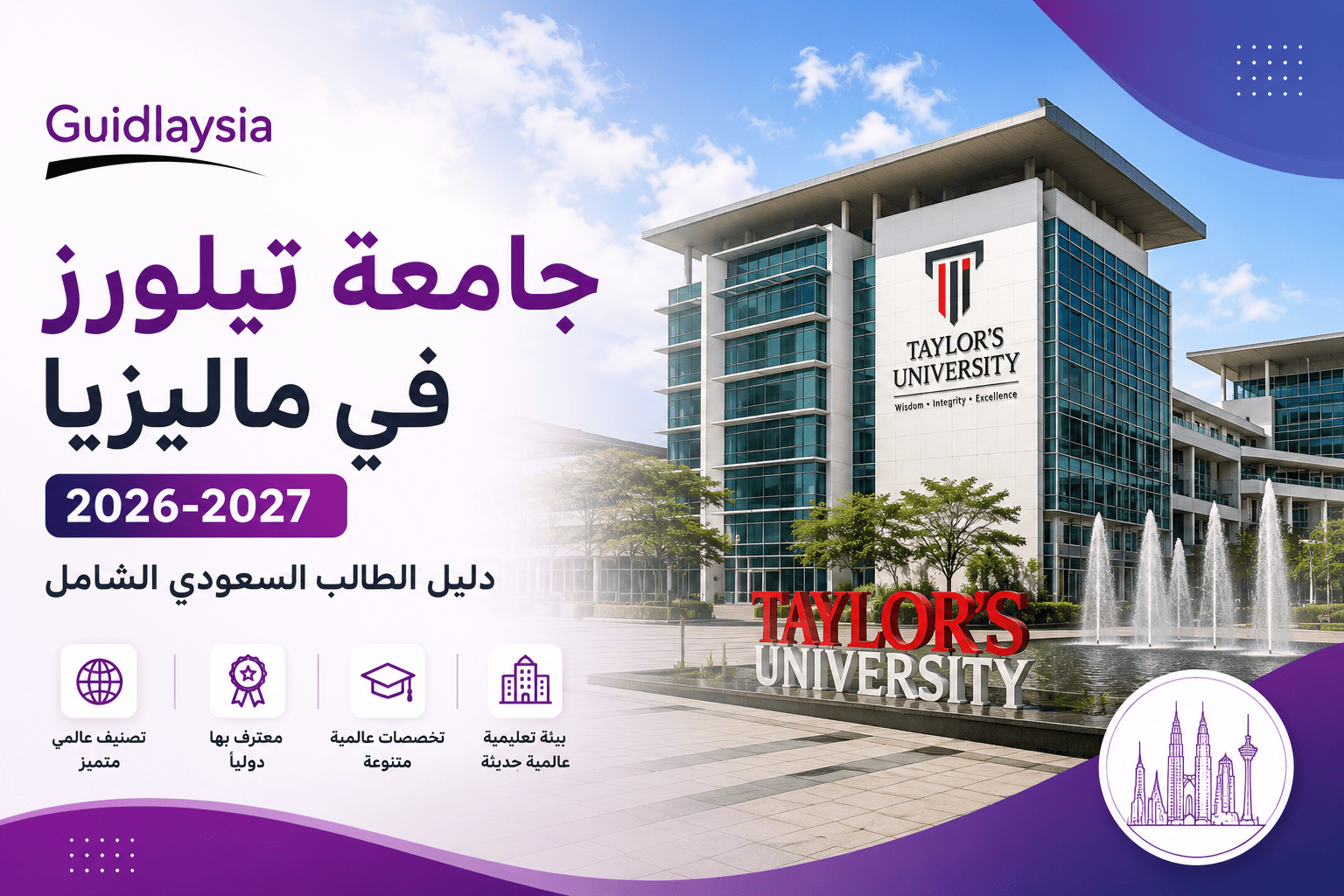
- Taylor's University: One of the best private universities in Malaysia, with strong programs in Business Administration, Tourism and Hospitality, Engineering, and Law.
- UCSI University: A flexible and diverse university, strong in Medicine, Pharmacy, Music, Engineering, and Business Administration.
- Sunway University: Distinguished by its international partnerships with prestigious universities like Lancaster University (UK), strong in Business Administration, Accounting, and Computer Science.
- Asia Pacific University (APU): Specialized in Technology and Digitalization, with strong programs in Computer Science, Cybersecurity, and Artificial Intelligence.
- INTI International University: Known for its transfer system to British and Australian universities, allowing students to earn double degrees.
Islamic Universities
- International Islamic University Malaysia (IIUM): An integrated Islamic university combining modern sciences and Islamic studies, offering programs in Shariah and Law, Islamic Economics, and Arabic Language.
- Al-Madinah International University (MEDIU): Specialized in Islamic Studies and Arabic Language, a preferred option for those wishing to study Shariah and Quran.
Important Note: Students must verify the updated list on the Safir platform (ru.moe.gov.sa) before applying, as it is updated annually.
Admission Requirements for Saudi Students 2026
Admission requirements vary depending on the level of study (Bachelor's, Master's, PhD) and the type of university (public or private). Here are the general requirements:
Bachelor's Degree Admission Requirements
- Academic Qualification: High school certificate (Tracks System or equivalent) with a minimum grade of 75%. For competitive public universities and majors like Medicine and Engineering, the required percentage may reach 80-85%.
- English Language Proficiency: Minimum IELTS score of 5.0-6.0 depending on the major and university. Some universities may accept alternative tests like TOEFL iBT or an internal placement test.
- Age Requirement: Applicants must be no older than 45 years at the time of registration.
- Financial Capability: Proof of sufficient funds to cover tuition fees and living expenses.
Master's Degree Admission Requirements
- Academic Qualification: Bachelor's degree with a minimum CGPA of 3.00 out of 4.00 or Upper Second Class Honours.
- English Language Proficiency: Minimum IELTS score of 6.0 or above.
- Academic References: Two recommendation letters from academic referees.
- Personal Statement: Statement of purpose explaining academic and career goals.
PhD Admission Requirements
- Academic Qualification: Master's degree in a relevant field with a minimum CGPA of 3.0.
- Research Proposal: Detailed research proposal of 2,000-5,000 words.
- English Language Proficiency: Minimum IELTS score of 6.0 or above.
- Academic References: Two to three recommendation letters from academic referees.
Required Documents and Attestation Process
Preparing documents is an integral part of the admission process for international students in Malaysian universities. Here is the list of essential documents:
- Valid Passport: Valid for at least 12-18 months from the date of application.
- Passport Photos: Recent color photos (4x6 cm) with white background.
- Birth Certificate: Translated into English.
- Academic Certificates: High school certificate (for Bachelor's), Bachelor's degree certificate (for Master's), or Master's degree certificate (for PhD), translated into English and attested.
- Academic Transcripts: Complete transcripts for all years of study, translated into English.
- English Proficiency Certificate: IELTS or TOEFL score report.
- Curriculum Vitae (CV): Translated into English.
- Recommendation Letters: For Master's and PhD applicants.
- Medical Report: Certificate proving freedom from infectious diseases, translated into English.
- Police Clearance Certificate: Translated into English.
- Bank Statement: Proving the ability to cover tuition fees and living expenses.
Document Attestation Process for Saudi Students
To ensure documents are officially accepted in Malaysia, follow these steps:
- Certified Translation: Translate certificates and transcripts into English from a certified translation office.
- Attestation by the Saudi Ministry of Education: Attest certificates from the Ministry of Education in the Kingdom.
- Attestation by the Saudi Ministry of Foreign Affairs: Attest documents from the Saudi Ministry of Foreign Affairs.
- Attestation by the Malaysian Embassy in Riyadh: As a final step, submit the documents to the Malaysian Embassy in Riyadh for certification.
Application and Admission Deadlines 2026
To understand application deadlines, it is important to distinguish between public and private universities, as their admission timelines differ significantly.
Public Universities
Malaysian public universities typically accept applications twice a year: in February and September. The evaluation and admission process takes about two months, so it is recommended to apply 3-4 months before the start of the semester. Approximate deadlines:
- First Semester (September/October): Application period typically starts in January and ends in July.
- Second Semester (February/March): Application period typically starts in June and ends in December.
Private Universities and International Branch Campuses
Private universities offer greater flexibility in admission dates, typically offering 3-4 semesters per year including spring, fall, and intermediate sessions (May/June). The evaluation process takes about two weeks only. Approximate dates:
- January/February: Start of the first semester.
- May/June: Start of the summer semester (for some).
- September/October: Start of the main fall semester.
Proposed Application Timeline for 2026
To ensure a smooth application experience, Saudi students are advised to follow this timeline:
- 12-18 months before: Research universities and suitable programs.
- 8-10 months before: Prepare and translate documents and papers.
- 6-8 months before: Apply to selected universities (especially public).
- 4-6 months before: Receive offer letter and pay the deposit.
- 3-4 months before: Begin visa procedures through EMGS.
- 1-2 months before: Receive eVAL and travel to Malaysia.
Student Visa Procedures for Saudis 2026 (Step by Step)
The student visa process in Malaysia is managed through a centralized system called EMGS (Education Malaysia Global Services). Students cannot apply directly to EMGS; instead, the university submits the application on their behalf after acceptance and deposit payment. Here are the detailed steps:
Step 1: Obtain an Unconditional Offer Letter
Before starting the visa process, students must obtain an Unconditional Offer Letter from a recognized and EMGS-registered university.
Step 2: Pay Deposit and Submit Documents to University
After accepting the offer, the student pays the tuition deposit (usually 2,000-5,000 MYR) and submits the required documents to the university for EMGS submission.
Step 3: University Submits Application to EMGS
The university uploads all documents to the EMGS portal and pays the processing fee on behalf of the student. Required documents include:
- Official offer letter from the university
- Completed and signed visa application form
- Copy of passport (valid for at least 12 months)
- Passport photos (white background)
- Academic records
- Proof of financial resources
- Medical certificate proving freedom from diseases
- English proficiency certificate
Step 4: EMGS Processing and eVAL Issuance
EMGS verifies the documents, conducts health and background checks, and seeks approval from the Immigration Department. This process typically takes 2-6 weeks. EMGS then issues the Visa Approval Letter (VAL), which is now issued electronically (eVAL).
Step 5: Obtain Single Entry Visa (SEV)
Saudis are among the nationalities requiring a Single Entry Visa (SEV) before entering Malaysia. Students obtain this visa from the Malaysian Embassy in Riyadh or Jeddah after receiving the eVAL. This step takes 1-3 weeks.
Step 6: Travel to Malaysia
Students travel to Malaysia within the eVAL validity period (6 months). The Malaysia Digital Arrival Card (MDAC) must be completed within 3 days before travel. Upon arrival, the following must be presented:
- Visa Approval Letter (eVAL)
- Offer letter from the university
- Passport
Step 7: Medical Check-up and Student Pass Issuance
Within 7 days of arrival, the student must undergo a medical examination at an EMGS-approved clinic. After that, the university submits the passport to the Immigration Department for the Student Pass sticker, which takes 2-4 weeks. During this period, the student is not permitted to travel outside Malaysia.
Visa Fees and Additional Costs
- EMGS Fees: Approximately 1,500-2,500 MYR (includes health insurance).
- Single Entry Visa (SEV) Fee: Varies by nationality.
- Medical Examination Fee: 100-300 MYR.
- Annual Renewal Fee: Approximately 450-600 MYR.
Important Visa Rules
- Mandatory Attendance Rate: The attendance rate must not fall below 80% to maintain visa validity.
- Work During Study: International students are permitted to work part-time up to 20 hours per week only during semester breaks, not during exam periods.
- Changing University: Requires returning to the country and obtaining a new visa under the new university's name.
- Visa Renewal: Renewal procedures must begin at least 2 months before the Student Pass expires.
Study and Living Costs in Malaysia 2026 (in Saudi Riyals)
Malaysia is one of the most affordable study destinations in Asia. Here is a detailed breakdown of estimated costs for 2026 in Saudi Riyals (approximate exchange rate: 1 MYR = 0.85 SAR):
Annual Tuition Fees
- Public Universities: 13,000 – 37,500 SAR.
- Private Universities: 30,000 – 55,000 SAR.
- Humanities and Management: 15,000 – 25,000 SAR.
- Engineering and Technology: 22,000 – 38,000 SAR.
- Medical Sciences (Medicine, Pharmacy, Dentistry): 45,000 – 85,000+ SAR.
Monthly Living Costs
- Accommodation: 350 – 1,300 SAR (depending on type: university dorms, shared apartments, private apartments).
- Food: 250 – 700 SAR (halal food is widely available and affordable).
- Transportation: 45 – 170 SAR (public transport is excellent and cheap).
- Utilities & Internet: 85 – 255 SAR.
- Personal Expenses & Entertainment: 150 – 400 SAR.
- Approximate Monthly Total: 1,000 – 2,500 SAR.
In comparison, study costs in Malaysia range between 3,750 and 22,500 SAR annually for public universities, making it an excellent economic option compared to Western countries.
Scholarships for Saudi Students in Malaysia 2026
Several scholarship opportunities are available for Saudi students wishing to study in Malaysia. Here are the most prominent:
Custodian of the Two Holy Mosques Scholarship Program
The main government program that includes 10 Malaysian universities (5 public and 5 private) in its approved list for 2026. The program includes four main tracks: Pioneers, Promising, Supply, and Research. Applications are submitted through the Safir platform of the Saudi Ministry of Education.
Malaysian International Scholarship (MIS) 2026
A fully funded Malaysian government scholarship for international students to pursue Master's and PhD studies. Coverage includes full tuition fees, monthly living allowance, and health insurance. The application deadline for 2026 was April 3, 2026. The scholarship requires a research proposal of at least 1000 words and proof of English proficiency.
MTCP Scholarship (Malaysian Technical Cooperation Programme) 2026
Another fully funded Malaysian government scholarship for Master's studies in Malaysia. One of the most distinguished scholarships in Southeast Asia.
Private University Scholarships
Most private universities offer partial scholarships (10-30% discount) for high-achieving students (3.5+). Some universities also offer full scholarships for outstanding students.
Daily Life and Tips for Saudi Students in Malaysia
The experience of studying in Malaysia for Saudi students is rich and distinctive. Here are some important aspects of daily life and practical tips:
Accommodation
Students have several housing options:
- University Housing: The safest and most convenient option for the first year.
- Shared Apartments: A popular choice after the first year, offering more privacy and independence.
- Homestay with Malaysian Families: An excellent option for cultural immersion and language practice.
Halal Food
Halal food is available almost everywhere in Malaysia, from small restaurants to fine dining establishments. There are also Arab restaurants in Kuala Lumpur serving Saudi and Gulf cuisine.
Transportation
Malaysia has an excellent public transport network including trains (LRT/MRT), buses, and the Grab app (similar to Uber). All are affordable and student-friendly.
Saudi Cultural Mission
The Saudi Cultural Mission is located in Kuala Lumpur and provides direct support to Saudi students, monitors their academic progress, and offers assistance with any academic or personal issues.
Golden Tips for Saudi Students
- Full Financial Support: Do not rely on work to cover your expenses, as student work laws are strict.
- Attendance Compliance: 80% attendance is mandatory to maintain visa validity.
- Start Early: Begin the application process 6-8 months before the start of studies.
- Learn Basic Malay: May help with daily communication outside the university campus.
- Contact the Mission: Register with the Cultural Mission immediately upon arrival in Malaysia.
- Join Student Clubs: Helps you make friends and adapt to the new life.
Frequently Asked Questions
Is studying in Malaysia recognized in Saudi Arabia?
Yes, the Saudi Ministry of Higher Education recognizes studies in Malaysia provided that the university is listed in the Safir platform.
What are the best Malaysian universities for Saudi students?
The University of Malaya (UM) is considered the best and oldest, followed by UPM, UKM, USM, and UTM. There are also excellent private universities like Taylor's, UCSI, Sunway, and APU.
How much does it cost to study in Malaysia for Saudi students?
Annual tuition fees range from 13,000 to 37,500 SAR at public universities, and from 30,000 to 55,000 SAR at private universities. Monthly living costs are approximately 1,000-2,500 SAR.
Does a Saudi student need a visa to enter Malaysia?
Yes, Saudis are among the nationalities that require a Single Entry Visa (SEV) before entering Malaysia.
Can Saudi students work while studying in Malaysia?
International students are permitted to work part-time up to 20 hours per week only during semester breaks.
How long does the visa process take?
EMGS processing takes 2-6 weeks. The total timeline from application to travel is approximately 2-3 months.
Are there scholarships for Saudis in Malaysia?
Yes, scholarships are available such as the Custodian of the Two Holy Mosques Program, the MIS Scholarship, and the MTCP Scholarship.
Conclusion
Malaysia is an ideal destination for Saudi students seeking high-quality education at affordable costs in a safe Islamic environment. With universities officially recognized by the Saudi Ministry of Education, streamlined visa procedures through the EMGS system, and competitive study and living costs, the dream of studying abroad is closer than ever. This comprehensive guide provides everything a Saudi student needs to make a confident decision, from choosing the right university, through document preparation and application, to obtaining the visa and settling in Malaysia. Always remember that early planning and adherence to regulations are the keys to success in this distinctive academic journey. We wish you success in your academic journey in Malaysia.
Ready to begin your journey in Malaysia? Guidlaysia provides free personalized guidance for Saudi students applying to Malaysian universities. From helping you choose the right program and university to guiding you through the application and visa processes, our team is here to support you every step of the way. Contact us today to start your 2026 application and achieve your academic dreams at a world-class Malaysian university.